Most Raleigh homeowners know they’re supposed to schedule HVAC maintenance, but fewer understand what actually happens during that visit. It’s not just a quick filter swap. A thorough maintenance appointment covers your entire system from the inside out, and the work done in that hour or two can determine how reliably your equipment performs through the next season and beyond.
Whether you’re in a newer build off Falls of Neuse Road or an older home in the Mordecai neighborhood, consistent HVAC maintenance is one of the highest-value investments you can make in your home’s comfort systems. Here’s a clear look at what a professional tune-up actually involves.
Why Maintenance Matters More in Raleigh’s Climate
Raleigh’s weather puts real demands on HVAC equipment. Summers are long, humid, and routinely push into the mid-90s. Winters bring cold snaps that stress heating systems that may have sat dormant for months. That cycle of heavy seasonal use means components wear faster, filters clog more quickly, and small issues have more opportunities to develop into larger ones.
In our service calls throughout Raleigh, we consistently find that systems with regular maintenance histories perform better, last longer, and require fewer emergency repairs than systems that only get attention when something breaks. Preventive care isn’t just about avoiding breakdowns; it’s about protecting the investment you’ve already made in your equipment.
The Full Scope of an HVAC Maintenance Visit
A professional maintenance appointment covers both your heating and cooling systems. The specific tasks vary slightly depending on the season and the type of equipment in your home, but a comprehensive visit typically includes all of the following.
Inspection and Cleaning of Key Components
The technician will work through both the indoor and outdoor units, inspecting and cleaning the components that affect performance and efficiency:
- Air filter inspection and replacement — A dirty filter is one of the most common contributors to reduced airflow, higher energy bills, and unnecessary system strain. The filter is checked and replaced if needed.
- Evaporator and condenser coil cleaning — Dirty coils reduce the system’s ability to transfer heat efficiently. Cleaning them helps restore efficiency and reduces the load on the compressor.
- Blower motor and fan blade inspection — The technician checks for wear, cleans accumulated debris, and ensures the motor is operating within normal parameters.
- Condensate drain line clearing — The drain line removes moisture pulled from your home’s air. When it clogs, water backs up, which can damage the unit or your home. Clearing it is a standard maintenance step.
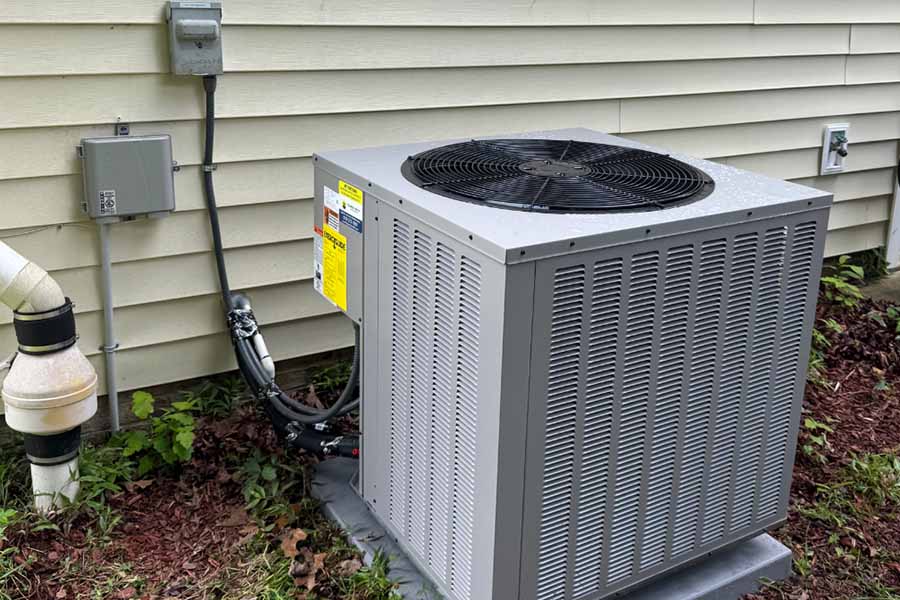
- Outdoor unit inspection — The condenser unit is checked for debris buildup, fin damage, and proper clearance. Fins may be straightened if bent, which improves airflow through the unit.
Electrical and Mechanical System Checks
Beyond cleaning, the technician performs a series of checks on the electrical and mechanical systems that keep everything running safely:
- Tightening of electrical connections — Loose connections are a fire hazard and can cause intermittent system failures. Every connection is checked and secured.
- Capacitor and contactor testing — These components are responsible for starting and running the motors in your system. They degrade over time and are a common point of failure. Testing them during maintenance allows for replacement before they fail unexpectedly.
- Refrigerant level check — Low refrigerant levels indicate a leak somewhere in the system. The technician checks levels and, if low, investigates the source rather than simply recharging without addressing the root cause.
- Thermostat calibration — The thermostat is tested to confirm its temperature readings are accurate and that it communicates correctly with the system. An uncalibrated thermostat leads to uneven comfort and wasted energy.
- Lubrication of moving parts — Motors and bearings that operate without proper lubrication wear out faster. Lubrication is a simple step that meaningfully extends component life.
Heating System Inspection
For homes with a gas furnace, the heating side of the maintenance visit includes its own set of critical checks:
- Heat exchanger inspection — A cracked heat exchanger can allow combustion gases, including carbon monoxide, to enter your living space. This is one of the most important safety checks in any furnace maintenance visit.
- Burner cleaning and inspection — Dirty burners reduce heating efficiency and can cause ignition problems. They’re cleaned and inspected for a proper flame pattern.
- Flue and venting inspection — The technician checks that exhaust gases are venting safely out of the home and that there are no blockages or deterioration in the flue system.
- Gas pressure and safety controls — Pressure is checked against manufacturer specifications, and safety controls are tested to confirm they’ll shut the system down if something goes wrong.
What the Technician Is Really Looking For
Beyond completing a checklist, an experienced technician uses the maintenance visit as an opportunity to spot developing problems before they become failures. Working in homes across Raleigh, we often identify issues during routine maintenance that homeowners had no idea existed: a capacitor nearing the end of its life, a refrigerant level that’s slightly off, or a heat exchanger with early signs of stress cracking.
Catching those issues during a scheduled visit gives you time to make an informed decision about repair or replacement. Discovering them during a breakdown in the middle of a heat wave gives you no options at all.
How Often Should Maintenance Be Scheduled?
The standard recommendation is twice per year:
- Spring — Before the cooling season begins, to prepare your AC system for the months of heavy use ahead
- Fall — Before heating season begins, to confirm your furnace or heat pump is ready for winter
Some homeowners enroll in a maintenance plan to keep this on a regular schedule without having to remember to call each season. A consistent maintenance history also helps preserve manufacturer warranties on equipment, which often include service requirements.
What Maintenance Cannot Fix?
It’s worth being clear about what maintenance is and isn’t. A tune-up keeps a functioning system running well and catches problems early. It doesn’t reverse years of neglect, and it can’t restore a system that’s reached the end of its useful life.
If the technician identifies a significant issue during the visit, such as a failed compressor, a cracked heat exchanger, or a refrigerant leak, they’ll clearly communicate and walk you through your options. In some cases, HVAC repair is the right next step. In others, especially with older equipment, HVAC installation and replacement may be the more cost-effective path forward. A trustworthy technician will give you an honest assessment either way.

Keeping Your HVAC System in Top Shape in Raleigh
A professional maintenance visit is thorough, systematic, and designed to keep your system performing reliably through whatever Raleigh’s seasons bring. It’s not glamorous work, but it’s one of the most valuable services you can invest in as a homeowner.
At Degree Above Heating & Air, our maintenance visits are built around genuine care for your equipment and honest communication about what we find. We’re a local, family-owned business, and the homes we service are our neighbors’ homes. That matters to us.
If you’re overdue for a tune-up or want to get on a regular maintenance schedule, contact our team today to book your HVAC inspection.